

Welcome to the professional physiotherapy clinic
- Unit- 607, 2250 Bovaird Dr E, Brampton, ON, L6R 0W3
Welcome to the professional physiotherapy clinic
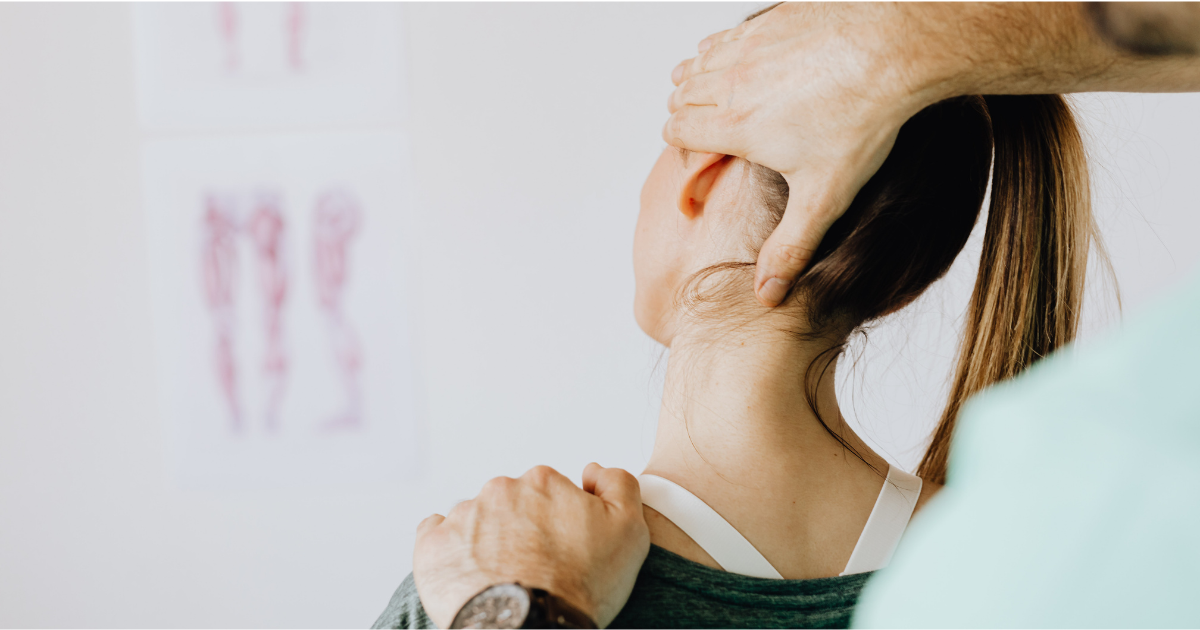
Chronic neck tightness and persistent head pressure are among the most common physical complaints in modern healthcare. Many individuals spend months or years coping with a tight “band-like” pressure around their forehead, intense throbbing at the base of the skull, or aching shoulders that tighten as the workday progresses. Over-the-counter pain medications and heating pads may provide temporary comfort, but they rarely resolve the underlying mechanical dysfunction driving the pain.
To understand why head tension originates in the neck, it is essential to look at upper cervical anatomy. The base of the skull rests directly on the first three cervical vertebrae (C1, C2, and C3). This region houses the suboccipital muscle group—a dense network of small, highly sensitive muscles packed with muscle spindles that control delicate head positioning and balance.
When poor posture, posture-related stress, or past whiplash injuries cause upper cervical joint subluxations or chronic muscle spasms, these tight tissues entrap the greater and lesser occipital nerves. As these nerves travel from the spine up over the scalp, mechanical compression sends referred pain signals over the head, behind the eyes, and across the temples. In clinical settings, head pain stemming from upper neck tissue restrictions is diagnosed as a cervicogenic headache or severe tension headache.
Clinical studies archived by the National Institutes of Health (NIH) and clinical research published by the American Headache Society confirm that targeted manual mobilization of upper cervical joints and soft tissues delivers significant, long-term reductions in headache frequency and intensity.
At MedLife Wellness Inc., our specialized Manual Therapy & Pain Management team targets these precise anatomical structures to break the cycle of chronic neck and head tension safely.
Chronic head tension is rarely just a headache; it is a structural chain reaction involving muscles, fascia, joints, and nerves across the upper body:
The suboccipital muscles (rectus capitis posterior major/minor and obliquus capitis superior/inferior) connect the occipital bone of the skull to the C1 (atlas) and C2 (axis) vertebrae. Sustained forward head posture strains these small muscles, causing chronic isometric contraction, cellular hypoxia, and hyper-irritable muscle knots (trigger points) that refer pain directly behind the eyes and forehead.
The greater occipital nerve pierces through the trapezius and suboccipital muscle bellies. When these muscles remain locked in spasm, they squeeze the nerve, triggering electric shocks, burning sensations, or intense pressure across the scalp.
The facet joints connecting C1, C2, and C3 allow your head to rotate and tilt. When joint capsules become stiff and restricted due to stress or injury, the surrounding spinal ligaments thicken, irritating upper cervical spinal nerves that share pain pathways with the trigeminal nerve (the primary sensory nerve of the face and head).
Specialized manual therapy utilizes evidence-based, clinician-guided hands-on interventions designed to restore joint mechanics and unbind tight fascial structures:
The clinician applies sustained, gentle fingertip pressure beneath the base of the skull. This soft tissue technique relaxes chronically shortened suboccipital fibers, taking mechanical traction off the skull and freeing trapped occipital nerves.
Using low-velocity, controlled manual oscillations, the clinician mobilizes restricted C1–C3 facet joints. Restoring natural joint play eliminates mechanical irritation along cervical nerve roots and restores fluid neck rotation.
Targeted pressure is applied to active trigger points in the upper trapezius, levator scapulae, and sternocleidomastoid (SCM) muscles. Releasing these knots restores local blood circulation and halts referred pain traveling to the temples and jaw.
Gentle fascial release techniques stretch continuous connective tissue sheaths from the upper back up into the scalp, reducing systemic mechanical tension across the cranial membrane.
| Treatment Metric | Standard Pain Medications | Targeted Manual Therapy Program |
| Primary Action | Suppresses brain pain perception & inflammation. | Realigns joints, releases muscle knots & frees nerves. |
| Occipital Nerve Impact | None (does not relieve physical nerve squeeze). | High (frees compressed occipital neural paths). |
| Duration of Relief | 4 to 8 hours (wears off as metabolized). | Long-term / Cumulative structural correction. |
| Side Effects / Dependency | Rebound headaches, stomach upset, liver strain. | Drug-free, non-invasive, and restorative. |
Because chronic head and neck tension affects posture, breathing, stress levels, and daily habits, treating it effectively requires multi-faceted care. At MedLife Wellness Inc., our manual therapy practitioners work alongside our complete clinical team:
When you visit MedLife Wellness Inc. for chronic neck and head tension, your clinical path is tailored for safety and comfort:
Clinical Disclaimer: The information provided in this publication is strictly for educational purposes and does not replace individual medical evaluation. If you experience sudden “thunderclap” headaches, head pain accompanied by fever, neck stiffness with confusion, or visual disturbances, seek emergency medical care immediately.
Do not let persistent headaches and neck tightness control your daily life. Experience specialized, non-invasive manual therapy at MedLife Wellness Inc. in Brampton.
Schedule Your Comprehensive Assessment Today or call our clinical team at 437-595-1600.