

Welcome to the professional physiotherapy clinic
- Unit- 607, 2250 Bovaird Dr E, Brampton, ON, L6R 0W3
Welcome to the professional physiotherapy clinic
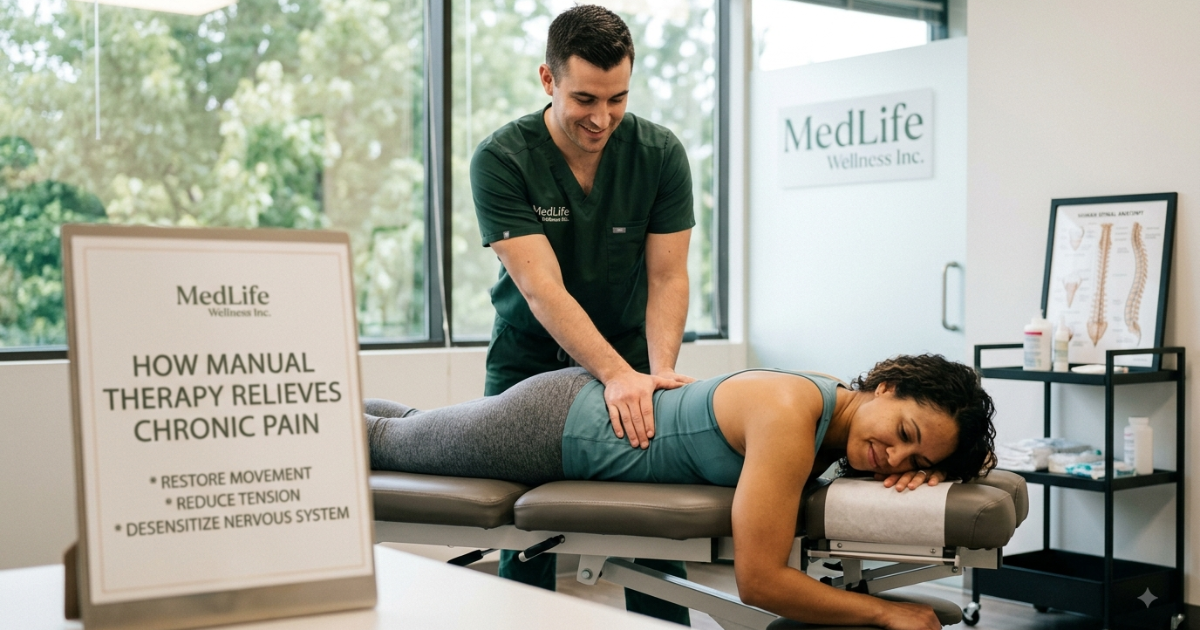
Living with chronic pain is an exhausting experience that impacts every dimension of daily life. Unlike acute pain which acts as a temporary, protective warning signal following an injury chronic pain lingers long past normal tissue healing time, usually defined as pain persisting beyond three to six months. Whether it presents as a persistent throbbing in your lower back, chronic neck stiffness from desk work, or deep joint aching that worsens with movement, chronic pain alters the way you live, move, and sleep.
For millions of individuals, conventional pain management relies heavily on pharmaceutical intervention. While non-steroidal anti-inflammatory drugs (NSAIDs), muscle relaxants, and prescription pain relievers can offer temporary relief, they rarely address the structural or neurological factors causing the pain. Over time, reliance on medications can lead to unwanted side effects, digestive complications, and diminished effectiveness.
This is why leading health organizations now recommend non-pharmacological, conservative care as a primary solution for persistent musculoskeletal pain. Among these treatments, Manual Therapy & Pain Management has emerged as one of the most effective, evidence-backed clinical options. By using targeted, skilled hands-on interventions, trained therapists directly address mechanical restrictions, tissue tightness, and nervous system wind-up to deliver long-term pain relief.
A common misconception is that manual therapy is simply a fancy term for a relaxing spa massage. While both involve hands-on touch, manual therapy is a specialized, clinical discipline performed by licensed physical therapists, chiropractors, and rehabilitation specialists following an in-depth clinical evaluation.
General massage primarily focuses on superficial muscle relaxation and stress reduction. In contrast, manual therapy is a targeted medical intervention designed to diagnose and treat specific structural impairments, joint restrictions, myofascial trigger points, and altered neurodynamics. Therapists apply measured, precise pressure, gentle stretching, and rhythmic joint glides to restore normal mechanical function to joints and soft tissues.
At multidisciplinary clinics like MedLife Wellness Inc., manual therapy is tailored to each individual’s unique anatomical needs, ensuring that treatment directly targets the tissue structures responsible for ongoing discomfort.
To understand why manual therapy is so effective for long-term chronic pain, it helps to examine the biological and neurological processes that take place during treatment. Manual therapy operates across four distinct physiological pathways:
When joints remain stiff or misaligned due to past injuries, poor posture, or arthritis, stress concentrates unevenly on surrounding cartilage, ligaments, and nerve endings. Manual therapists apply controlled joint mobilizations passive, low-velocity oscillatory movements that gently glide joint surfaces across one another.
This mechanical movement breaks down micro-adhesions, restores normal joint mechanics, and stimulates the flow of synovial fluid (the body’s natural joint lubricant). As joint mobility improves, mechanical strain decreases, relieving the constant pressure that triggers localized pain signals.
Muscles and fascia (the connective tissue webbing surrounding every muscle, bone, and organ) can form tight knots or dense scar tissue in response to chronic strain or injury. These areas, known as myofascial trigger points, restrict blood flow, accumulate metabolic waste, and send referred pain to distant parts of the body.
Through specialized techniques like cross-friction massage, active release, and trigger point therapy, clinicians break up fibrotic scar tissue, restore tissue elasticity, and increase localized blood circulation. Enhanced blood flow delivers fresh oxygen and vital nutrients needed to repair chronically fatigued muscle fibers.
One of the most fascinating aspects of manual therapy is its direct effect on the nervous system. According to the well-established Gate Control Theory of Pain, non-painful sensory inputs can inhibit or “close the gate” to painful stimuli traveling up the spinal cord to the brain.
When a skilled therapist applies pressure or mobilization to a painful joint, specific mechanoreceptors (touch and movement sensors) in the skin and deep tissues are activated. These fast-conducting sensory signals travel to the spinal cord faster than slower pain signals (nociceptive fibers), effectively blocking the pain messages from reaching the brain’s conscious awareness.
In cases of long-standing chronic pain, the brain and nervous system often enter a state called central sensitization. In this state, the nervous system becomes hyper-reactive, turning up the volume on sensory signals so that even normal touch or light movement is interpreted as intense pain.
Hands-on manual therapy helps calm this overactive “fight-or-flight” sympathetic response. The therapeutic touch triggers the release of natural pain-inhibiting neurochemicals such as endorphins, serotonin, and dopamine while lowering systemic stress hormones like cortisol. Over a course of treatments, this helps re-train the nervous system to process movement without triggering pain alarms.
The effectiveness of manual therapy is supported by an extensive body of international medical research. Clinical studies published across leading healthcare databases consistently highlight the role of manual techniques in managing chronic musculoskeletal conditions.
According to clinical practice guidelines published by the American College of Physicians (ACP) and systematic reviews indexed in the National Center for Biotechnology Information (NCBI), non-pharmacological interventions including manual therapy, exercise, and spinal manipulation should be used as primary treatments for chronic lower back pain, neck pain, and osteoarthritis.
| Chronic Health Condition | Primary Tissue Problem | How Manual Therapy Helps | Clinical Outcome |
|---|---|---|---|
| Chronic Lower Back Pain | Facet joint stiffness, lumbar muscle spasms, disc strain | Lumbar joint mobilization, deep tissue release, pelvic alignment | Reduced localized pain, improved spinal flexion, reduced medication dependence |
| Chronic Neck Pain & Tension Headaches | Cervical joint restriction, suboccipital muscle tightness | Cervical mobilization, myofascial release, gentle traction | Lower headache frequency, restored neck rotation, reduced nerve irritation |
| Shoulder Impingement & Rotator Cuff Pain | Glenohumeral joint tightness, scapular muscle imbalance | Joint capsule mobilization, rotator cuff soft tissue release | Increased overhead range of motion, decreased impingement pain |
| Osteoarthritis (Knee & Hip) | Cartilage wear, joint capsule tightness, reduced synovial fluid | Gentle distraction, passive joint gliding, surrounding muscle relaxation | Easier walking mechanics, decreased stiffness, enhanced joint fluid lubrication |
Because chronic pain presents differently in every individual, skilled practitioners utilize a variety of hands-on techniques based on specific tissue needs:
While manual therapy provides rapid pain relief and restores movement, combining hands-on treatment with active rehabilitation ensures that the pain does not return. Passive treatments (what the therapist does for you) work best when paired with active treatments (what you do for yourself).
For example, after manual therapy frees up a stiff hip or spinal joint, performing targeted strengthening exercises through Physiotherapy helps stabilize the newly gained range of motion. Similarly, incorporating therapeutic soft tissue work from Massage Therapy helps maintain muscle flexibility between clinical visits.
For patients whose chronic pain stems from sports activities or repetitive strain, combining manual techniques with structured Sports Injury Management accelerates safe return to physical activity.
Manual therapy is a highly versatile treatment suitable for individuals across various age groups and activity levels. You may be an ideal candidate for manual therapy if you experience:
If you are new to manual therapy, knowing what happens during a session can help you feel confident and prepared:
Medical Disclaimer: The information provided in this article is for educational and informational purposes only and is not intended as medical advice. Always seek the advice of a qualified healthcare provider regarding any medical condition or treatment plan. Never disregard professional medical advice or delay seeking it because of something you have read on this site.
Break free from persistent pain and restore your natural mobility with personalized, evidence-based manual therapy at MedLife Wellness Inc. in Brampton.
Book Your Individual Assessment Today at MedLife Wellness Inc. or call our team directly at 437-595-1600.