
Welcome to the professional physiotherapy clinic
- Unit- 607, 2250 Bovaird Dr E, Brampton, ON, L6R 0W3
Welcome to the professional physiotherapy clinic
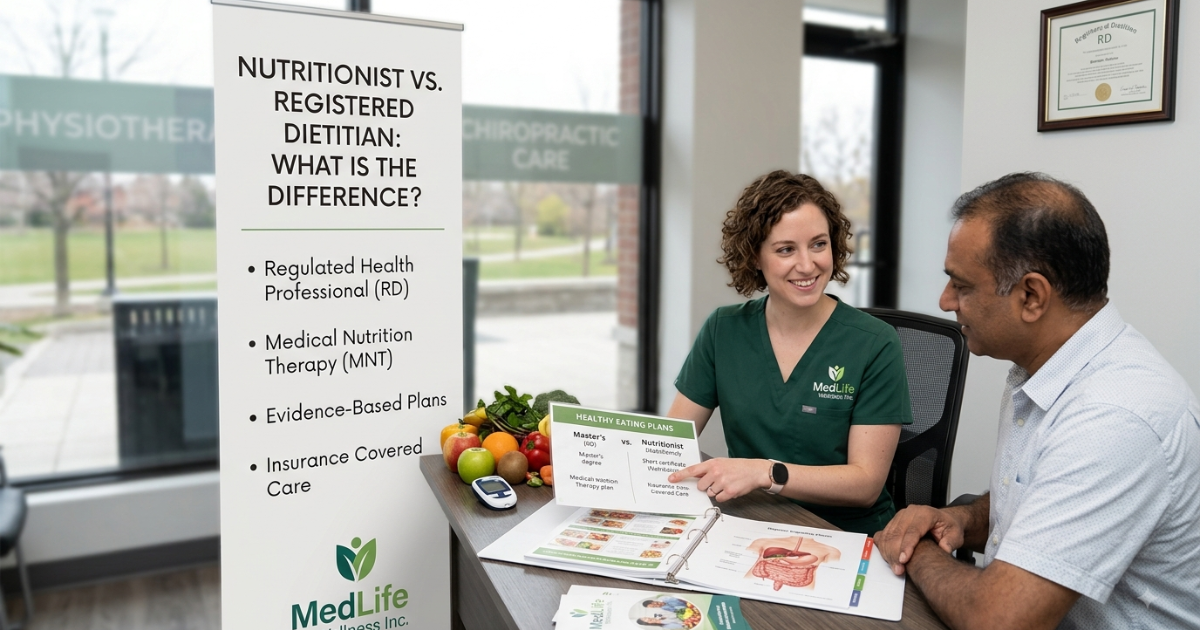
Every day, we are bombarded with conflicting nutritional advice. From social media influencers hyping restrictive detox diets to trendy wellness coaches promoting specialized supplement stacks, figuring out how to eat for optimal health can feel like navigating a maze. When you decide to seek professional guidance, you quickly encounter two widely used titles: Nutritionist and Registered Dietitian.
At first glance, these terms might seem interchangeable. After all, both professionals focus on food, health, and lifestyle habits. However, assuming they are identical is a mistake that can impact both your physical health and your wallet. The difference between hiring a Registered Dietitian and an unregulated nutritionist often comes down to medical expertise, clinical evidence, regulatory safety, and specialized training in managing chronic health conditions.
At MedLife Wellness Inc., we prioritize transparency and evidence-based clinical care. This detailed guide breaks down the essential differences in education, credentials, legal protections, clinical scope, and insurance coverage so you can make an informed choice for your personal health journey.
A Registered Dietitian (RD) or Registered Dietitian Nutritionist (RDN) is a credentialed medical professional who translates the complex science of nutrition into practical, evidence-based interventions for health maintenance and clinical disease management.
In regions such as Ontario, Canada, dietetics is a legally protected health profession, regulated under provincial legislation similarly to doctors, nurses, and physiotherapists. The title “Dietitian” is restricted by law, meaning individuals cannot legally call themselves a dietitian unless they are active, registered members of the provincial regulatory college (such as the College of Dietitians of Ontario).
To earn and maintain the Registered Dietitian designation, practitioners must complete a rigorous, standardized academic and clinical journey:
Because of this extensive clinical background, dietitians specialize in Nutrition Counselling & Dietitian Care that safely integrates with medical diagnoses, laboratory bloodwork, and pharmaceutical prescriptions.
Understanding the title “Nutritionist” requires recognizing that its meaning varies significantly based on geographic location and regulatory frameworks. In many jurisdictions—including several provinces and states the title “nutritionist” is not legally protected or standardized.
This absence of universal regulation means almost anyone can call themselves a nutritionist, regardless of whether they hold a PhD in Nutritional Sciences, a certificate from a weekend online course, or no formal training at all. While there are highly educated holistic nutritionists and certified sports nutritionists with legitimate university degrees, the title itself does not automatically guarantee standardized clinical training or regulatory accountability.
Because the bar for entry varies, nutritionists generally fall along a broad spectrum:
While a nutritionist can provide valuable encouragement, general meal ideas, and accountability for basic wellness goals, they are legally and clinically restricted from diagnosing medical conditions or providing Medical Nutrition Therapy for disease management.
To help you evaluate these options at a glance, the table below contrasts the fundamental differences between Registered Dietitians and standard Nutritionists:
| Comparison Dimension | Registered Dietitian (RD) | Nutritionist |
| Title Protection & Legal Status | Legally protected title regulated by government-mandated professional colleges. | Title is often unregulated (varies by region); anyone can technically use it. |
| Educational Requirement | Accredited 4-year Bachelor’s or Master’s Degree in Dietetics & Human Nutrition. | Varies widely—from 6-week online certificates to private college diplomas. |
| Practical Clinical Training | 1,000+ hours of supervised clinical internships in hospitals and health centers. | Typically no required clinical hospital training; varies by diploma program. |
| Medical Scope of Practice | Licensed to deliver Medical Nutrition Therapy (MNT) for acute and chronic diseases. | Restricted to general wellness guidance, habit coaching, and basic nutrition education. |
| Insurance & Benefits Coverage | Covered under most extended private health insurance plans and employee benefits. | Rarely covered by private healthcare insurance plans. |
| Accountability & Public Safety | Bound by strict legal ethics, liability insurance, practice audits, and regulatory boards. | No centralized government oversight board or mandatory regulatory code of conduct. |
A critical distinction separating dietitians from general nutritionists is the ability to provide Medical Nutrition Therapy (MNT). MNT is an evidence-based clinical discipline that uses targeted dietary interventions to prevent, manage, or treat specific medical diagnoses.
According to health resources like the Academy of Nutrition and Dietetics and clinical guidelines indexed in the National Institutes of Health (NIH), MNT plays a central role in managing chronic systemic conditions.
When you consult an RD for Medical Nutrition Therapy, your practitioner performs an in-depth clinical evaluation that considers your biochemical bloodwork, medical history, prescription drug interactions, and digestive health. Examples of MNT include:
Optimal health is rarely achieved in isolation. When nutrition care is integrated alongside other physical therapies, recovery accelerates significantly.
At MedLife Wellness Inc., our Registered Dietitians work collaboratively with our broader clinical team to build holistic treatment plans:
While general wellness advice can be found online, seeking care from a Registered Dietitian is highly recommended if you match any of the following profiles:
If you have never worked with a Registered Dietitian before, knowing what to expect can help you feel prepared and comfortable:
Medical Disclaimer: The information provided in this article is for educational and informational purposes only and is not intended as medical advice. Always seek the advice of a qualified healthcare provider regarding any medical condition or treatment plan. Never disregard professional medical advice or delay seeking it because of something you have read on this site.
Stop guessing with fad diets. Work with a Registered Dietitian at MedLife Wellness Inc. in Brampton to build a personalized, evidence-based plan tailored to your body’s unique needs.
Book Your Initial Dietitian Consultation Today at MedLife Wellness Inc. or call our clinic directly at 437-595-1600.